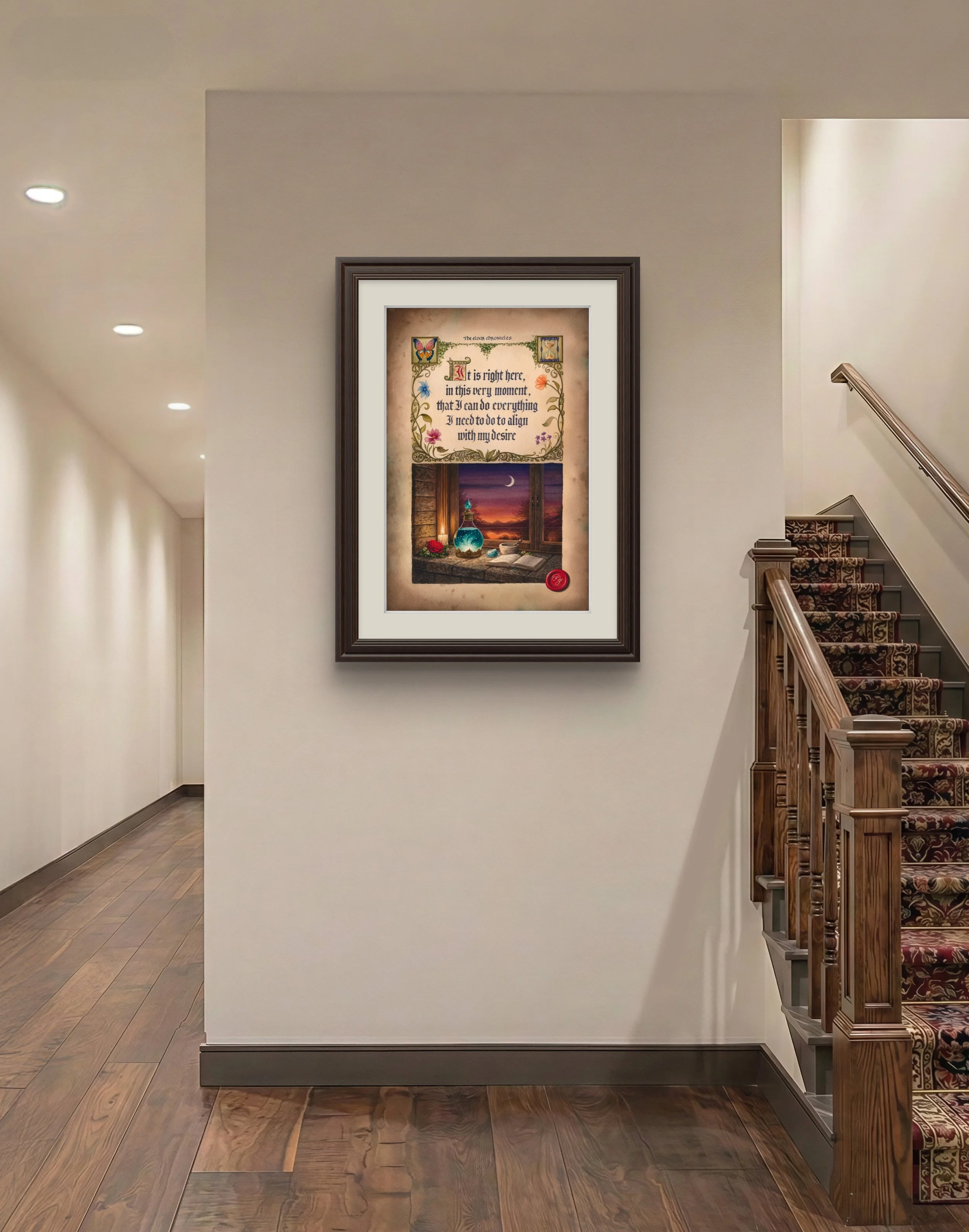
Who’s the “I” in my affirmations?
Every time I walk back into my studio, there is one core idea that fires me up—the very thing that sets my work apart from the conventional view of art.
When we think of a painting on a wall, we usually treat it like a window. We stand back, admire it, or try to decode it from a safe distance, looking through it into the artist’s world.
But an affirmarelle asks for a far more intimate connection. Participation in art is often understood in literal terms: touching an object, moving through an installation, or physically altering the work. That is not what I mean here.
Why We Hang Art on Our Walls
If we look at the history of art collecting, people usually buy artwork for four main reasons:
The Heart: A pure, visceral emotional connection or a love for aesthetic mastery.
The Portfolio: Treating art as a financial asset, a safeguard against inflation, or a strategic legacy.
The Space: Seeking a piece that enhances the atmosphere and aesthetics of a room.
The Mirror: The desire for identity and status. Traditionally, a collector buys a piece to project their identity outward—showing the world their taste, sophistication, or social standing.
When I sit at my desk, dipping my pen into the ink to write an affirmation in the first person, I am targeting a completely different layer of identity. I am asking a fundamental question:
Who is the "I" in that sentence?
The Ancestral Magic of "Inhabiting" the Artwork
When an affirmarelle features a statement like "It is right here, in this very moment, that I can do everything I need to do," that "I" doesn't belong to me alone. It becomes a vacant seat that anyone can step into to experience a desired shift in identity.
In a way, this approach flips the modern idea of art collecting on its head. Instead of buying a piece to show the world who you already are, you bring an affirmarelle into your home to remind yourself of who you are becoming. It is not a passive reflection of your current status; it is an active companion in your spiritual evolution.
And honestly? I wonder whether this impulse reaches back to the very origins of art.
Think of Palaeolithic cave paintings. Some anthropologists have suggested that the depictions of animals deep within dark, torch-lit caves served purposes beyond decoration or representation. In some interpretations, these images were part of ritual practices through which hunters sought to connect or identify with the spirit of an animal. Perhaps, before venturing out to hunt a bison, they would enter the cave and immerse themselves in its image, aligning themselves with the strength and success they hoped to embody. They didn't just observe the animal; they inhabited the vision.
An analogous principle lives within sacred traditions, where prayers, mantras, and passages of scripture are repeated not simply to communicate meaning, but to internalise it. Through repetition, words move from something we say to something we inhabit.
A way of being you can return to
What I am doing with affirmarelles is simply bringing that ancient magic back into our modern living spaces.
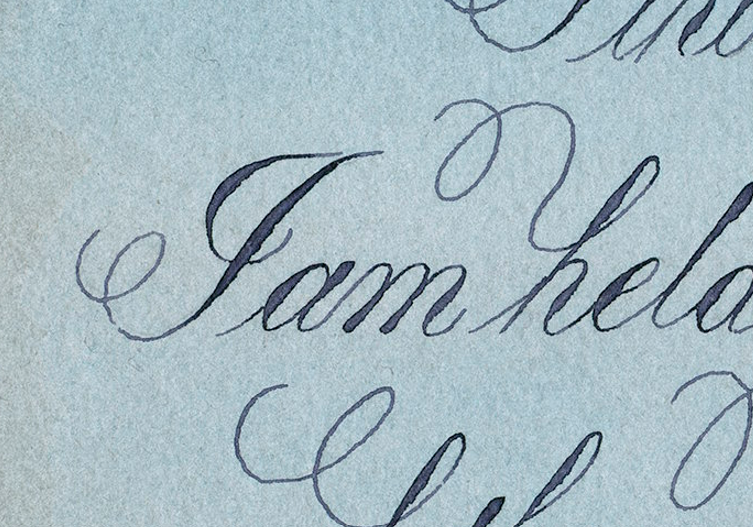
The heavy 640 gsm 100% cotton paper, the layers of rich watercolour pigments, the calligraphy executed with a traditional dip pen—and at times, the luminous touch of 23-carat gold leaf—give the physical piece a sense of history, permanence, and authority.
But the true transformation lies in the grammar. An affirmarelle never says, "You are held in the boundless love of the Divine." A statement like that offers comfort from the outside, positioning the viewer as the recipient of reassurance.
Instead, by using the first person—"I am held"—it simply presents an open door, inviting the viewer to step through it on their own. I believe this offers a more empowering way to engage with art.
And the most interesting part is that the more familiar you become with the possibility it offers, the more naturally you may begin to inhabit it—not as an ideal to chase, but as a way of being you can return to.